When a tooth is damaged by decay or a small fracture, a filling does more than patch the surface — it restores chewing ability, protects the inner tooth, and preserves your smile’s appearance. Modern restorations are designed to replicate the look, feel, and strength of natural tooth structure while minimizing further damage.
Because tooth decay affects people of all ages, filling procedures are among the most common treatments performed in dental practices. They are a key tool in preventing minor problems from becoming major ones, and when done thoughtfully, they can extend the life of a tooth for many years.
At Wells Dentistry, we combine precise clinical technique with up-to-date materials to deliver restorations that are both durable and discreet. We take time to explain options, listen to patient preferences, and select the approach that preserves the most healthy tooth structure while restoring function.
Humanity’s efforts to repair decayed teeth date back millennia, but modern restorative dentistry accelerated during the 19th and 20th centuries with the introduction of metal-based fillings and, later, tooth-colored materials. Over recent decades, advances in adhesive chemistry and ceramics have shifted the emphasis toward restorations that blend seamlessly with your smile.
Today’s materials aim to balance longevity, biocompatibility, and aesthetics. While older metallic restorations are still respected for their strength, many patients prefer tooth-colored options that preserve appearance without sacrificing function.
Every filling begins with a careful exam and a clear discussion of alternatives. Our priority is to remove only the diseased tissue, protect the remaining tooth, and choose a material that meets your needs for appearance and performance. Treatment is delivered with patient comfort in mind, using local anesthesia and a calm, methodical workflow.

Not all fillings are the same. Some are placed directly into the tooth during a single visit, while others are crafted outside the mouth and bonded into place. The choice of material depends on the cavity’s size and location, the patient’s bite pattern, cosmetic expectations, and long-term goals for oral health.
Modern restorative options prioritize conservation of tooth structure and aim for a harmonious balance between strength and appearance. The right material can modernize the look of a tooth while offering resistance to wear and marginal breakdown.
Below are the common restorative classes you may encounter during treatment planning. Each has specific advantages and ideal clinical uses.
Composite resins are versatile, resin-based materials reinforced with glass or ceramic fillers. They are matched to the color of your teeth and bonded to the tooth structure to provide both a seal and support. Because composites require less removal of healthy tooth tissue than some alternatives, they’re often favored for visible areas where aesthetics matter.
Composites perform well for small to medium cavities and for cosmetic repairs such as smoothing chips or reshaping edges. With proper oral hygiene and routine dental care, composite restorations can provide years of reliable service, though they may show wear or staining sooner than ceramic options in heavy-use situations.
Amalgam has a long history of dependable performance in posterior teeth. Made from a metal alloy, these restorations are valued for strength and resistance to fracture. They are particularly useful in areas of the mouth subjected to high biting forces or when a cost-effective, durable repair is the top priority.
While less commonly chosen for visible front teeth due to their metallic appearance, amalgam fillings remain a practical solution in specific clinical scenarios requiring maximum durability.
Glass ionomer cements chemically bond to tooth structure and release fluoride over time, providing an added protective benefit for vulnerable teeth. These materials are often selected for small restorations near the gumline, pediatric applications, and temporary repairs where ease of placement and fluoride delivery are helpful.
Because glass ionomers are generally less wear-resistant than composites or ceramics, they are frequently used in locations that receive lighter chewing forces or as interim solutions while a longer-term plan is developed.
Ceramic restorations are fabricated in a lab or created with CAD/CAM technology and then bonded to the tooth. They offer excellent color stability and resistance to staining, making them a premium option for restoring larger cavities where appearance and longevity are priorities.
Indirect restorations like inlays and onlays preserve more natural tooth structure than full crowns and can be an excellent compromise between conservative care and durable results.
Gold remains one of the most durable restorative materials available. Its predictable wear characteristics and gentle behavior against opposing teeth make it a respected choice for certain posterior restorations. Gold is less commonly selected today due to aesthetic preferences, but it continues to be relevant when longevity and material stability are primary concerns.
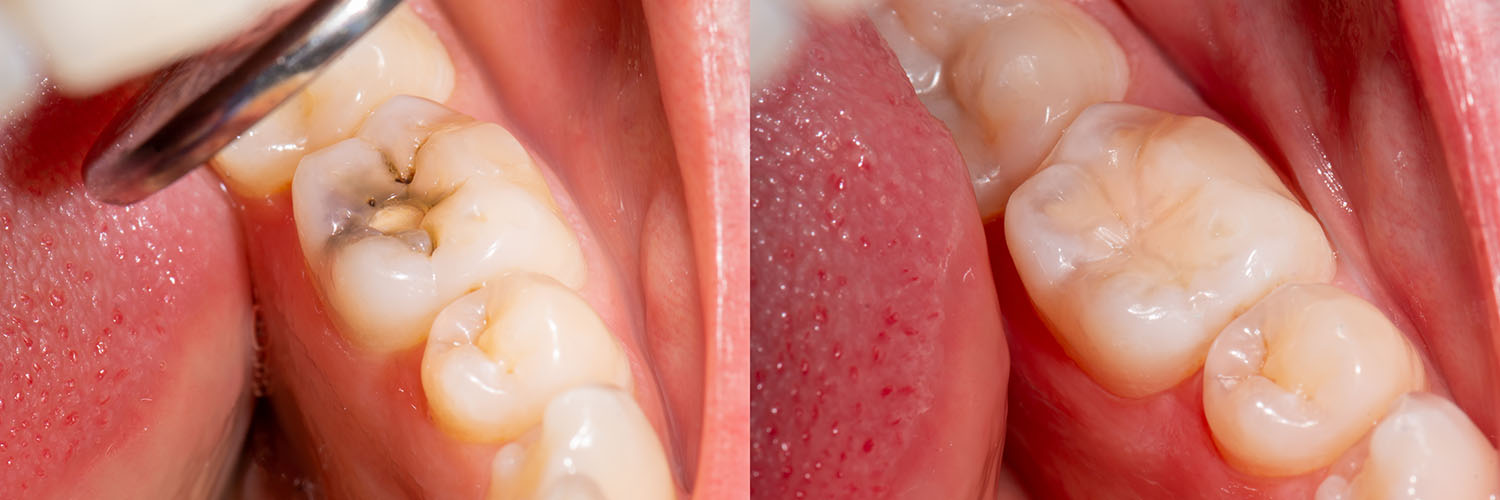
When a cavity is identified, the process begins with a clear explanation of the findings and the recommended plan. You’ll be informed about which restorative options are clinically appropriate, how the procedure will proceed, and what to expect during recovery. Our goal is to make each step transparent and comfortable.
Treatment typically involves numbing the area with local anesthesia so the procedure is comfortable. We use magnification, isolation techniques, and modern instruments — including drills, air abrasion, or lasers where appropriate — to remove decay precisely while preserving healthy tissue.
For direct restorations such as composites and glass ionomers, the filling is placed and finished in the same appointment. For larger repairs that require lab-fabricated ceramics or gold, a conservative preparation is completed and the final restoration is bonded in a subsequent visit. Throughout, attention to fit and occlusion helps ensure the restoration functions naturally within your bite.
If dental anxiety is a concern, we offer a calm, patient-centered approach and can discuss comfort options to help you feel relaxed during treatment.
Choosing the right filling involves more than picking a shade. We consider the tooth’s location, the extent of decay or damage, occlusal forces, your aesthetic preferences, and long-term maintenance. Our recommendations aim to strike the best balance between conservation, function, and appearance.
For smaller cavities in visible areas, tooth-colored composites or ceramic inlays can deliver exceptional aesthetic results. For large restorations in back teeth where strength is critical, a ceramic onlay or a traditional metal restoration may be advised. Wherever possible, we favor approaches that preserve tooth structure and simplify future care.
We also review practical aspects of care after placement — such as how to protect the filled tooth during the first days, what to expect with sensitivity, and routine habits that help extend a restoration’s life. When appropriate, Dr. Jessica Wells will review treatment options personally so you can make an informed choice with professional guidance.
Once a filling is in place, the immediate recovery period is usually brief. It’s common to experience temporary numbness right after a visit — avoid chewing until sensation returns. Minor sensitivity to hot, cold, or pressure can occur but typically subsides within days to weeks.
Longer-term success depends on good home care and routine checkups. Brushing twice daily with a fluoride toothpaste, flossing daily, and keeping periodic dental visits allow us to monitor restorations for wear, margin integrity, and any new areas of concern. Avoiding hard or overly sticky foods immediately after placement helps prevent early damage to a fresh restoration.
When a filling shows signs of wear, marginal staining, or recurrent decay, timely evaluation allows for conservative retreatment. Regular dental exams enable early detection of issues so we can protect the tooth and avoid more invasive procedures later.
Protect the numb area: Wait to eat until sensation returns to avoid accidental injury.
Expect short-term sensitivity: Mild sensitivity is common and typically resolves on its own; persistent pain should be evaluated.
Care for longevity: Maintain consistent oral hygiene and attend routine dental visits to track the restoration’s condition.
In every case, our aim is to deliver restorations that restore comfort and function while blending naturally with your smile. If you have questions specific to your dental needs or would like to review options for a particular tooth, please contact us for more information.
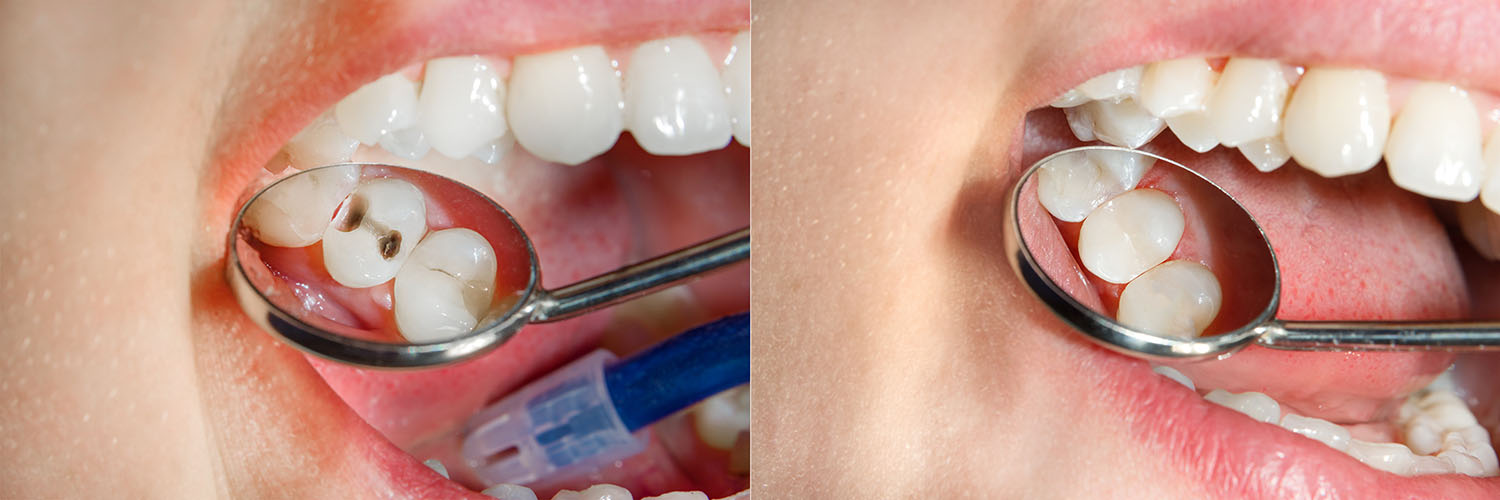


Dental fillings are restorative materials placed into a tooth to replace lost structure caused by decay or minor fracture. They restore chewing function, seal the tooth against bacteria, and help preserve the tooth’s overall strength and appearance. When placed appropriately, fillings prevent small problems from progressing into more extensive treatments.
The goal of a filling is to remove diseased tissue while conserving as much healthy tooth structure as possible. Modern materials are engineered to mimic the look and function of natural enamel and dentin. Choosing the right material and technique can extend the service life of the tooth and maintain a pleasing smile.
Contemporary filling materials include tooth-colored composite resins, traditional amalgam, fluoride-releasing glass ionomers, laboratory-fabricated ceramics for inlays and onlays, and precious metal options such as gold. Each material has distinct properties related to strength, wear resistance, color stability, and biocompatibility. The clinical situation, aesthetic goals, and functional demands of the tooth guide the selection.
Composite resins are popular for visible areas because they can be color-matched and bonded to the tooth, conserving more natural structure. Ceramic inlays and onlays provide excellent color stability and durability for larger restorations, while glass ionomers release fluoride and are useful in certain pediatric or low-stress situations. Amalgam and gold remain relevant for scenarios where maximal strength and longevity are primary considerations.
A typical filling visit begins with a clinical exam and any necessary imaging to assess the extent of decay or damage. The area is numbified with local anesthesia when needed, and the clinician uses precise techniques to remove only diseased tissue while protecting healthy structure. Isolation and magnification help ensure a clean, dry field for optimal bonding or placement of the chosen material.
Direct restorations such as composites and glass ionomers are placed and finished in a single appointment, shaped to restore anatomy and occlusion. Indirect restorations like ceramic inlays or onlays involve fabricating the restoration outside the mouth and bonding it at a subsequent visit. Throughout the procedure attention to fit, contact points, and bite balance helps the restoration integrate naturally into the mouth.
Direct restorations are placed directly into the prepared tooth during one appointment and include materials such as composite resin and glass ionomer. These restorations are sculpted, cured, and finished chairside, which can preserve tooth structure and reduce treatment time. Direct techniques work well for small to moderate cavities and for repairs that require immediate restoration.
Indirect restorations, including ceramic inlays, onlays, and gold restorations, are fabricated outside the mouth in a laboratory or with CAD/CAM milling and then bonded to the tooth. Indirect options are chosen for larger defects where greater strength and precision fit are needed while still conserving more tooth than a full crown. Because they are custom-made, indirect restorations can offer superior longevity and aesthetic stability in many clinical situations.
The lifespan of a filling depends on the material used, the size and location of the restoration, the patient’s bite forces, and oral hygiene practices. Composites may last many years but can show wear or staining earlier in high-stress areas, while ceramics and gold often have superior long-term durability. Regular dental checkups allow clinicians to monitor marginal integrity and detect early signs of deterioration.
Factors such as grinding, clenching, frequent exposure to acidic conditions, and poor home care can accelerate wear or lead to recurrent decay around a restoration. Timely evaluation and maintenance, including polishing, repair, or replacement when indicated, help protect the tooth from more invasive treatment. Preventive measures and appropriate material selection tailored to the tooth’s function are key to maximizing a restoration’s service life.
Some degree of sensitivity to hot, cold, or pressure is common after a filling and typically resolves within days to a few weeks as the tooth adjusts. Sensitivity may be higher when a deep area of decay was close to the nerve or when larger amounts of tooth structure were restored. Over-the-counter pain relievers and avoiding very hard or extremely hot and cold foods in the immediate recovery period often help manage symptoms.
Persistent or worsening pain, prolonged sensitivity, or a sharp discomfort when biting should be evaluated promptly, as these signs can indicate issues such as a high spot, marginal leakage, or an affected tooth nerve. Early assessment allows for targeted adjustments, repair, or further treatment if necessary. Communication with your dental team ensures that discomfort is addressed and the restoration performs as intended.
An inlay, onlay, or crown is typically recommended when the cavity or structural loss is too extensive for a simple filling to provide reliable, long-term support. Inlays and onlays restore larger areas while conserving more tooth structure than a full crown and are appropriate when cusps are intact or only partially compromised. Crowns are indicated when a tooth requires more comprehensive coverage to protect remaining structure and restore function.
The decision balances preservation of healthy tooth tissue with the need for strength and durability in the restored tooth. Indirect restorations distribute biting forces more predictably for larger defects and can improve the tooth’s resistance to future fracture. A careful clinical assessment helps determine which option offers the best prognosis for the tooth in question.
Good oral hygiene is the foundation for preserving fillings: brush twice daily with fluoride toothpaste, floss daily, and follow recommended recall visits so your dentist can monitor restorations. Avoiding chewing very hard foods and limiting prolonged exposure to highly acidic beverages can reduce stress and surface breakdown on restorations. If you grind or clench your teeth, discuss protective options such as a night guard to reduce wear.
Routine professional cleanings and exams allow early detection of marginal staining, recurrent decay, or wear that may warrant conservative repair. Promptly reporting any changes in function or comfort helps address issues before they progress. Consistent home care combined with periodic professional assessment supports the long-term success of your restorations.
At Wells Dentistry, we evaluate each case by considering the tooth’s location, the extent of damage, bite dynamics, aesthetic preferences, and long-term maintenance needs. Our approach emphasizes conserving healthy tooth structure while selecting materials that meet functional and cosmetic goals. We use modern diagnostic tools and a patient-centered discussion to present clinically appropriate options.
Dr. Jessica Wells and the clinical team explain the benefits and limitations of each choice and tailor recommendations to the individual patient’s priorities and oral health status. The selected plan aims to balance durability, biocompatibility, and appearance while minimizing future risk to the tooth. Shared decision-making helps patients feel informed and confident about their treatment path.
A cavity visit begins with a clear explanation of findings and a discussion of the recommended treatment, including which materials and techniques are clinically appropriate. Local anesthesia is used as needed to ensure comfort, and the clinician employs isolation and precision instruments to remove decay while protecting healthy tooth structure. For direct fillings the restoration is placed and finished in the same appointment, while indirect options may require a second visit for final cementation.
The team focuses on patient comfort and transparency throughout the process, addressing questions about recovery, temporary sensitivity, and home care. You will receive guidance on protecting the filled tooth during the immediate healing phase and recommendations for follow-up monitoring. If you have concerns about anxiety or special needs, the office can discuss options to help you feel more relaxed during treatment.

It's time for your check-up!
Scheduling your next visit or getting answers about our comprehensive dental services is simple when you contact Wells Dentistry. Our friendly administrative team is prepared to help you find the perfect appointment time, provide clarity on your treatment plan options, and efficiently manage any billing or insurance questions. We are ready to assist you by phone or via our quick online form. Contact us today and let us partner with you to maintain a healthy, beautiful smile for years to come.