Invisalign® offers a discreet, modern alternative to traditional braces, using a sequence of clear, removable aligners to guide teeth into improved positions. The system combines digital imaging with tailored fabrication so treatment can be planned and visualized before the first aligner is ever produced. For many adults and teens, this approach delivers meaningful alignment improvements with fewer aesthetic and lifestyle compromises than fixed appliances.

Invisalign® for Teens

Invisalign® for Brides

Invisalign® for Travelers
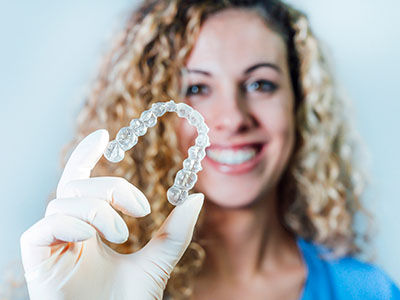
Before & After Photos
Invisalign® Videos
FAQs
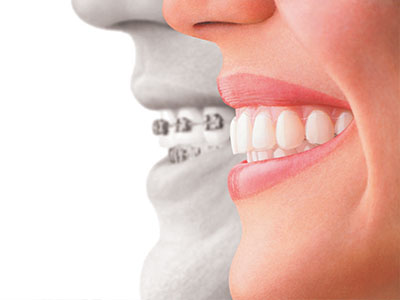
Invisalign® vs Braces
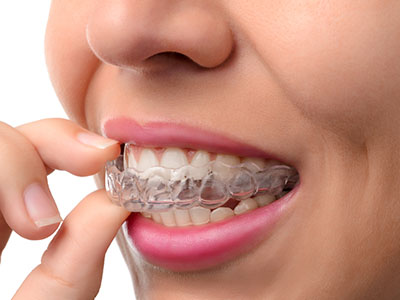
Invisalign® vs Direct-To-Consumer Aligners
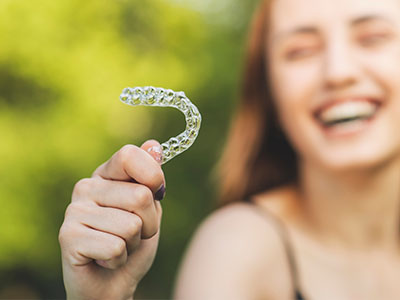
Is Invisalign® Right For Me?

Invisalign® Costs
With aligners that are practically transparent, most people notice change before anyone else notices you’re in treatment. The discrete nature of the trays makes it easy to maintain your daily routine, while still achieving consistent, controlled tooth movement. Because the trays are removable, you can keep up with normal oral hygiene and enjoy meals without brackets or wires to work around.
Invisalign® employs advanced 3-D computer imaging to map out a full course of treatment, producing a customized series of clear aligners designed to move teeth incrementally. Each aligner applies gentle, targeted pressure to specific teeth, and patients typically switch to the next tray in the series at regular intervals until the planned outcome is reached. This predictable, step-by-step method gives clinicians fine control over the sequence and timing of tooth movements.
The process begins with a digital scan or impression that captures your current dental alignment. Using that data, clinicians and proprietary software design a sequence of movements that will safely shift teeth toward the desired positions. Each aligner in the series represents a small, deliberate change from the previous one — a gradual progression that minimizes discomfort and maximizes control.
Modern aligner materials are engineered to deliver consistent force over time while remaining flexible enough for patient comfort. When necessary, small tooth-colored attachments can be bonded temporarily to specific teeth to help the aligner grip and direct force where it’s needed most. These additions are subtle and are removed once the targeted movements are complete.
Because the treatment is mapped digitally, we can provide a visual preview of expected results, which lets you and your clinician refine goals before the first aligner is created. Throughout treatment, progress is monitored at scheduled visits so adjustments can be made and refinements ordered if the outcome needs fine-tuning.
Invisalign® is a versatile option for many common alignment issues, including mild to moderate overcrowding, spacing, and certain bite irregularities. Adults who prefer a less visible treatment and teens who want flexibility with sports and social activities often choose clear aligners for those lifestyle advantages. The system is particularly appealing when aesthetic considerations are a priority.
Not every case is identical; complex skeletal discrepancies or severe bite problems may require specialized orthodontic care or a combined approach that goes beyond aligners alone. During an initial consultation, we evaluate tooth and jaw relationships, dental health, and treatment goals to determine whether aligners are an appropriate primary option or part of a broader plan.
Success with aligner therapy relies on patient participation. Aligners must be worn for the prescribed number of hours each day, and adherence to scheduled check-ins helps maintain momentum. With consistent wear and good oral hygiene, many patients see steady improvement and can reach their smile goals within the projected timeframe.
Your first visit focuses on a thorough assessment: we’ll review your dental history, examine tooth positions, and capture a digital scan or impressions so a customized plan can be developed. You’ll be able to view a simulated progression of the proposed treatment, which clarifies both goals and the anticipated sequence of movement.
After the plan is approved, a series of custom aligners is fabricated to match the recommended stages. You’ll be instructed on how to wear them, how to switch trays, and how to care for both your teeth and the aligners. Early in treatment you may notice slight pressure for a day or two after changing to a new tray — a normal sign that teeth are responding.
Follow-up visits are generally shorter than traditional orthodontic appointments and focus on monitoring progress and addressing any questions. If additional refinement is needed, further aligners can be ordered to fine-tune the result. Once the active phase is complete, a retention strategy helps preserve the alignment long-term.
The backbone of clear aligner therapy is digital planning. High-resolution scans and computer simulations allow clinicians to visualize tooth movement in three dimensions and plan each stage with greater predictability. This level of control helps reduce surprises and supports clearer communication about expected results.
Manufacturing techniques and materials have evolved so aligners can apply nuanced forces across individual teeth. When combined with small auxiliary tools — such as attachments or interproximal reduction when appropriate — the system can address a broader range of tooth movements than earlier generations of clear aligners could manage.
Clinicians use these digital tools not only to design treatment but also to document progress. Periodic reviews of treatment milestones let the dental team compare real outcomes to the planned progression and determine whether refinements are required to stay on course toward the intended smile.
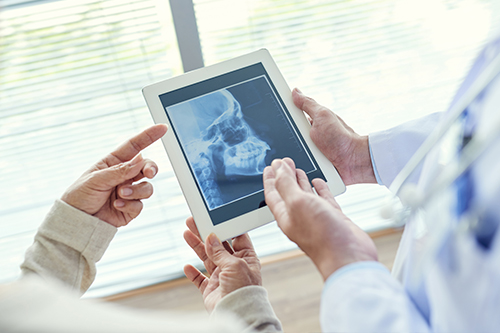
We begin by assessing oral health, discussing your goals, and capturing digital images that form the foundation of your personalized plan.
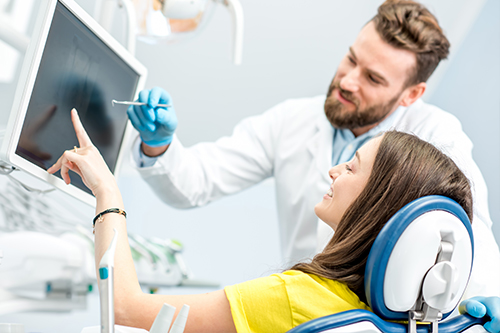
Before fabrication, you’ll see a step-by-step simulation of how your teeth are expected to move, which helps set clear expectations from day one.
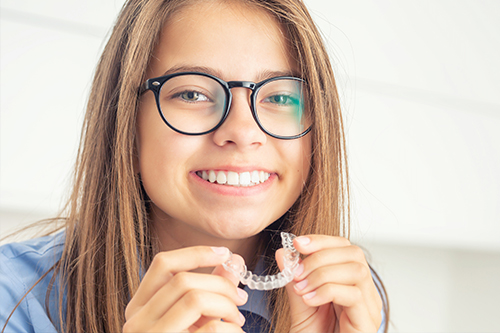
Your aligners are manufactured to fit your mouth precisely, with smooth edges and transparent material designed for daily wear.

Regular check-ins allow us to monitor progress, answer questions, and make adjustments so your treatment remains efficient and effective.
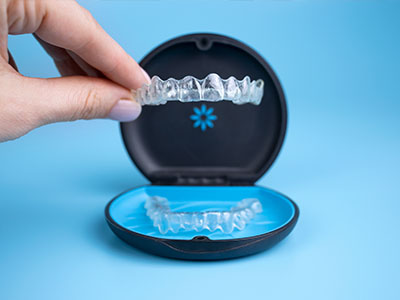
Simple, consistent care helps aligners stay clear and effective. Rinse trays daily, brush them gently with a soft toothbrush as recommended, and store them in their case when not in use to avoid loss or damage. Avoid hot water and abrasive cleaners that can distort the material.
While aligners are removable for meals and brushing, wearing them for the prescribed daily hours is essential to keep progress on schedule. Good oral hygiene practices — brushing, flossing, and routine dental cleanings — support both treatment success and long-term oral health.
After completing active aligner therapy, a retention plan is typically advised to preserve your smile. Retainers can be clear or removable and are chosen to fit your lifestyle and the clinical needs identified during treatment. Ongoing dental checkups help confirm that your results remain stable over time.
Short videos demonstrate the treatment process, clinical details, and practical tips for living with clear aligners.
*Invisalign® is a registered trademark of Align Technology, Inc.
Wells Dentistry combines clinical expertise with modern technology to offer thoughtful, patient-centered aligner treatment. If you’d like to learn whether clear aligners are a suitable option for your smile, please contact us for more information and to schedule an initial consultation.
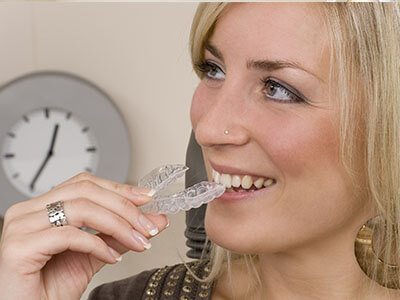

Invisalign® is a clear aligner system that straightens teeth using a series of custom, removable trays rather than fixed metal wires and brackets. Each aligner represents a small, planned adjustment designed to move teeth gradually toward the desired alignment. The treatment relies on digital scans and computer-driven planning to map the entire movement sequence before fabrication begins.
The primary differences from traditional braces are aesthetics and removability: aligners are nearly transparent and can be taken out for eating and oral care, which can make hygiene and daily routines easier. Aligners can address many common alignment issues, though certain complex skeletal problems may still require traditional orthodontics or combined treatment. Clinical oversight remains essential regardless of the appliance chosen to ensure safe, effective tooth movement.
Your Invisalign® journey begins with a clinical evaluation where the dentist assesses oral health, bite relationships, and treatment goals; at Wells Dentistry we use this visit to determine whether clear aligners are appropriate and to capture detailed digital scans. Those scans are uploaded to proprietary planning software that generates a three-dimensional treatment simulation showing anticipated tooth movements and a projected outcome. You and your clinician review the simulation together and refine goals before approving the series of aligners for fabrication.
Once the aligners are produced, you will receive instructions on how long to wear each tray and when to change to the next in the series. Treatment proceeds through regular intervals of aligner wear with periodic monitoring visits so progress can be confirmed and any refinements ordered if necessary. The process emphasizes predictable, incremental movement and active collaboration between you and the dental team.
Ideal candidates for Invisalign® include adults and motivated teens with mild to moderate crowding, spacing, or bite irregularities who want a less visible orthodontic option. Candidates must have healthy teeth and gums before starting treatment, since active periodontal disease or untreated decay can complicate tooth movement. Compliance is also important because aligners must be worn for the prescribed daily hours to achieve the planned results.
Some complex cases—such as severe skeletal discrepancies, very large tooth movements, or certain occlusal problems—may require traditional braces, orthognathic surgery, or a hybrid approach that combines aligners with other appliances. A thorough clinical exam and digital assessment during the initial consultation will determine whether Invisalign® alone is appropriate or if a referral or combined plan is indicated.
Treatment time with Invisalign® varies by case complexity but commonly ranges from several months to a year or more; your individualized plan will include an estimated timeline based on the number and type of movements required. Factors that influence duration include the severity of misalignment, whether attachments or auxiliaries are needed, and the frequency of refinement phases. Biological factors such as age and bone response can also affect how quickly teeth move.
Patient behavior plays a major role in meeting projected timelines: wearing aligners for the recommended daily hours, attending scheduled check-ins, and following clinical guidance all help keep treatment on track. If progress deviates from the plan, the clinical team may order additional aligners or adjust the sequence to refine the result, which can extend the overall treatment period but improves the final outcome.
In daily life, Invisalign® aligners are designed to be discreet and minimally disruptive; they are nearly transparent and removable for eating, brushing, and flossing. You should plan to wear aligners for the prescribed number of hours each day—typically most of the day and night—to ensure steady progress. Most patients notice mild pressure or soreness for a day or two after switching to a new tray, which is a normal sign that teeth are responding to the treatment.
Because aligners are removable, you can continue many normal activities such as sports, public speaking, and social events with little visual impact on your smile. It’s important to establish routines for cleaning and storing aligners to prevent loss or damage, and to brush your teeth before reinserting trays to maintain oral hygiene and reduce the chance of staining or odor.
Proper care for Invisalign® aligners helps keep them clear and effective: rinse them with lukewarm water after removing, brush them gently with a soft toothbrush if recommended, and store them in their protective case when not in use. Avoid hot water and abrasive cleaners that can warp or scratch the material, and do not use toothpaste with harsh abrasives on the trays. Routine cleaning of the aligners and regular replacement as instructed will help preserve fit and transparency.
Maintaining excellent oral hygiene is essential during aligner therapy: brush and floss thoroughly after meals before putting aligners back in to prevent trapping food and bacteria against tooth surfaces. Continue regular professional cleanings and dental exams so the team can monitor oral health and address any issues that might affect treatment. Clear communication with your clinician about any concerns ensures aligners remain an effective part of your care plan.
Some Invisalign® cases use small tooth-colored attachments bonded to specific teeth to improve aligner grip and enable more precise force application for certain movements. These attachments are subtle, carefully placed to support targeted rotations, extrusions, or other complex adjustments, and they are removed once the necessary movement is achieved. In other instances, clinicians may recommend interproximal reduction (IPR) or the use of elastics to manage space or influence bite relationships.
Auxiliary procedures are planned during the digital treatment design so you know what to expect before fabrication begins. When applied, these aids are integrated into a comprehensive approach focused on predictable, safe movement and minimal impact on daily life. Your dentist will explain the purpose, benefits, and temporary nature of any auxiliary measures during the consultation.
Digital planning is central to Invisalign® therapy: high-resolution intraoral scans create an accurate 3-D model of your teeth that clinicians use to visualize and sequence each planned movement. The software generates a simulation that shows anticipated stages and the projected final result, allowing both patient and clinician to set realistic goals and refine the approach before any aligners are produced. This forward-looking plan helps improve predictability and communication throughout treatment.
Digital records also support clinical decision-making during treatment by enabling comparisons between the planned progression and actual outcomes. When discrepancies arise, the team can quickly order refinements or adjust the plan based on recorded scans and observations, which reduces uncertainty and helps maintain momentum toward the intended result.
Progress is typically monitored through scheduled follow-up visits where the dentist examines fit, tooth movement, and oral health; these appointments are often shorter than traditional orthodontic visits but are important for keeping treatment on track. The clinical team compares current tooth positions to the planned sequence and evaluates compliance, attachment condition, and any need for refinements. If minor adjustments are required, additional aligners or modifications to the plan can be made to fine-tune the result.
At Wells Dentistry our team emphasizes ongoing communication so patients understand milestones and next steps throughout their course of care. Consistent monitoring not only supports predictable outcomes but also helps identify and address any clinical or hygiene issues early, which contributes to a safer and more effective treatment experience.
Retention is a crucial phase after active aligner therapy because teeth can gradually shift back toward their original positions without support. Most clinicians recommend a retention plan that may include clear or removable retainers worn according to a prescribed schedule to preserve alignment. The type and duration of retention depend on individual factors such as the original malocclusion, tooth movement achieved, and long-term stability considerations.
Regular dental checkups help ensure retainers fit properly and that alignment remains stable over time; the team can recommend adjustments or replacement retainers if wear or changes occur. Adhering to the retention protocol provided by your clinician gives the best chance of maintaining the smile improvements achieved during Invisalign® therapy.
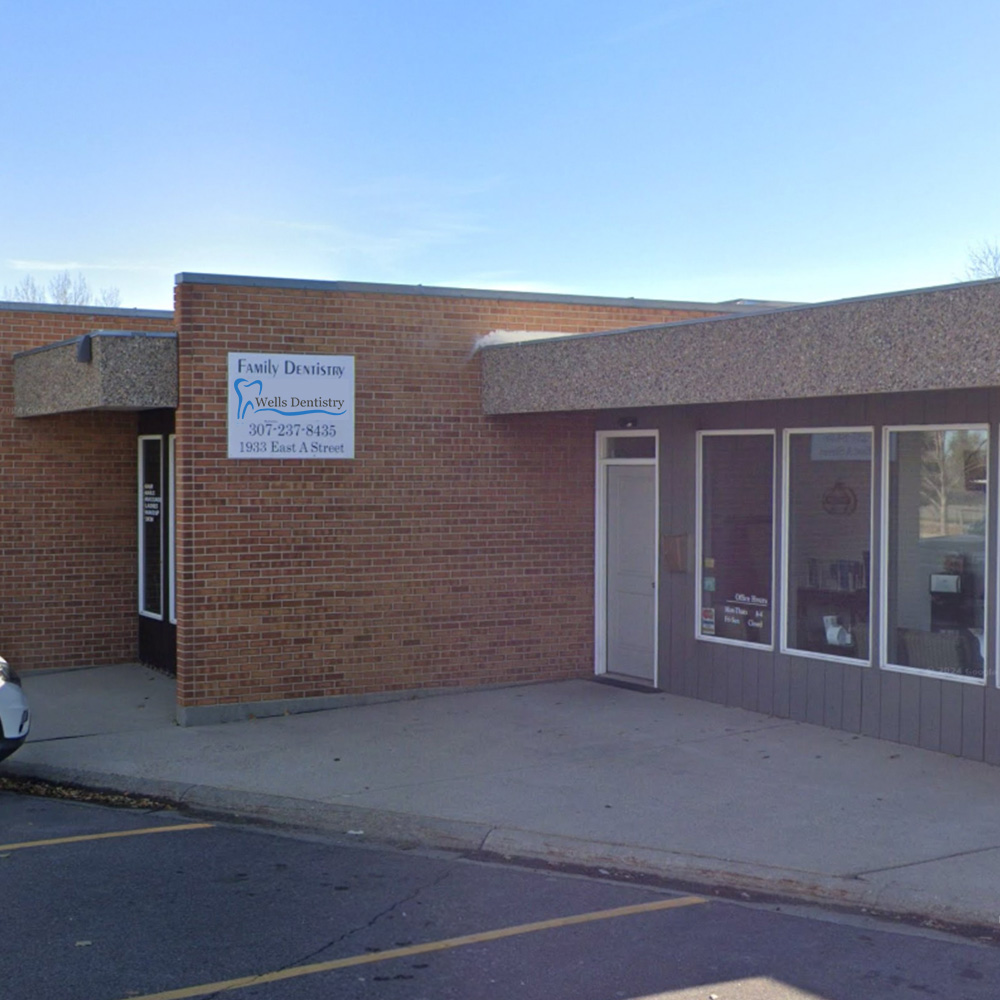
It's time for your check-up!
Scheduling your next visit or getting answers about our comprehensive dental services is simple when you contact Wells Dentistry. Our friendly administrative team is prepared to help you find the perfect appointment time, provide clarity on your treatment plan options, and efficiently manage any billing or insurance questions. We are ready to assist you by phone or via our quick online form. Contact us today and let us partner with you to maintain a healthy, beautiful smile for years to come.